
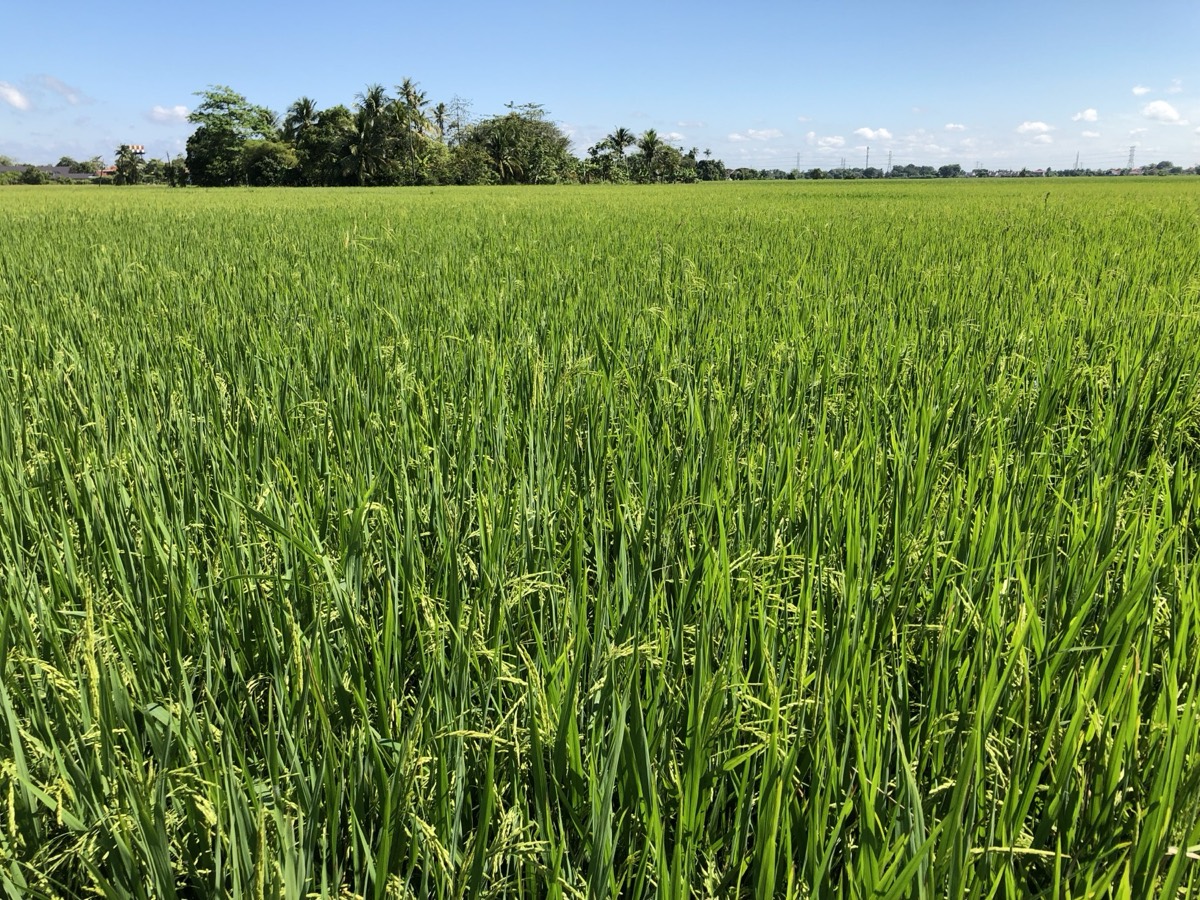
The Cost of Research
One of the first challenges any researcher will encounter will be the cost of gathering relevant data under field conditions. The reliability, accuracy and provenance of that data are foundationally critical to any study being done. This is a primary cost driver determining the amount of funding any study requires.
Straight from source
One of Buku Padi’s primary aims is, with the permission of farmers and farming organizations, to provide relevant data, straight from source to research institutions. No averages, aggregates, normalized or any other processed data. With their permission, we can pull data from farmers, weather stations and a variety of other sensors and store this over time to help ensure that every single commercial plot can be a test plot.
Researchers can then focus on the specific parameters they wish to investigate, without having the burden of gathering the more standard ones. We can use this as a positive feedback loop to create a whole environment of continuous improvement.
We believe this will be extremely powerful and boost the rate of rice research and productivity.
The Need for Data in Rice Research
Rice is not merely an agricultural commodity in Malaysia. It is a strategic staple that is closely linked to national food security, rural livelihoods, economic stability, and social well-being. Despite continued efforts to strengthen the domestic rice industry, Malaysia remains a net importer of rice, with substantial financial resources spent annually to meet domestic demand. Although national rice production has increased moderately over time, domestic consumption has grown at a faster rate, widening the gap between local supply and national requirements.
This situation has intensified concerns regarding Malaysia’s ability to achieve a sustainable level of rice self-sufficiency. The sector continues to face significant constraints, including high production costs, limited suitable production areas, variable farm productivity, labour shortages, climate-related risks, and continued dependence on imported rice. In response, the Government has introduced various interventions intended to increase domestic production, support farmers, stabilise prices, and safeguard consumer welfare. Such measures are undoubtedly important. However, despite substantial public investment and institutional support, domestic production has generally remained below 65% of national rice consumption, while productivity growth has been relatively limited.
This raises an important question: how can government interventions, research investments, and technological innovations be designed and implemented more effectively?
From a researcher’s perspective, one of the most fundamental barriers to advancing rice research and development in Malaysia is the limited availability of reliable, comprehensive, and accessible data. Researchers from universities, government agencies, and research institutions require accurate information to identify production constraints, evaluate the effectiveness of existing interventions, develop appropriate technologies, and formulate evidence-based recommendations. Without dependable data, research questions may be based on incomplete assumptions, interventions may not address the actual problems experienced by farmers, and the impact of public investment may be difficult to measure objectively.
The Need for Data in Rice Research (cont./)
At present, valuable data relating to the rice production system are collected by various institutions, including the Department of Agriculture, the Muda Agricultural Development Authority, Integrated Agricultural Development Areas, BERNAS, research institutes, and other relevant organisations. These data may include information on agricultural inputs, varieties, fertiliser and pesticide applications, cultivation practices, field operations, production costs, yields, environmental conditions, and farmers’ management decisions. However, the information is often fragmented across institutions and collected for different administrative or operational purposes.

Several limitations reduce the research value of these datasets. Data may be collected only periodically rather than continuously, may not be available in real time, and may be reported as averages for broad geographical areas or collection centres. In some cases, the sampling procedures, data definitions, measurement methods, and validation processes may not be clearly documented. Information obtained primarily through farmer reporting or infrequent surveys may also be affected by recall errors, inconsistent record-keeping, and differences in interpretation. Furthermore, aggregated statistics may conceal substantial variation among farms, localities, seasons, soil conditions, management practices, and production environments.
A centralised and integrated rice data platform
A centralised and integrated rice data platform is therefore urgently needed. Such a platform should not merely serve as a repository for existing statistics. It should establish standardised data definitions, transparent collection methodologies, quality-control procedures, and mechanisms for regular verification and updating. Wherever possible, data should be gathered at an appropriate spatial and temporal resolution, including information specific to individual production areas, seasons, and fields. Data reported by farmers could be strengthened through validation by extension officers, field observations, digital farm records, remote-sensing technologies, automated monitoring systems, and systematic surveys.
The establishment of a reliable, centralised platform would provide researchers with a stronger foundation for multidisciplinary studies across the entire rice production system. It would facilitate research on varietal improvement, crop management, soil fertility, pest and weed management, mechanisation, precision agriculture, climate resilience, production economics, supply-chain efficiency, and policy evaluation. It would also enable researchers to compare production environments, identify the causes of yield gaps, assess the performance of technologies under actual field conditions, and determine which interventions deliver meaningful benefits to farmers.
“Importantly, improved data availability would strengthen collaboration among universities, research institutes, government agencies, industry stakeholders, extension services, and farming communities.”
Instead of conducting isolated studies using fragmented datasets, researchers could build upon a shared evidence base, reduce duplication of effort, and direct limited research resources towards the most urgent and consequential challenges. Decision-makers would also be better equipped to evaluate the effectiveness of subsidies, incentives, infrastructure investments, extension programmes, and other forms of government support.
Reliable data are the foundation of reliable science. Without them, even well-designed research programmes may produce findings that are difficult to validate, scale, or translate into effective policy. Conversely, an accessible, standardised, and continuously updated rice production database could transform the way research is planned and conducted in Malaysia. It would allow the nation to move from generalised assumptions towards field-specific evidence, from reactive interventions towards predictive planning, and from fragmented initiatives towards coordinated national action.
Ultimately, strengthening Malaysia’s rice sector requires more than increasing inputs or introducing individual technologies. It requires a clear and accurate understanding of what is occurring in farmers’ fields, why productivity differs between locations, which interventions are effective, and where research and resources should be prioritised. A centralised and reliable data platform will provide the evidence needed to answer these questions and will serve as an important foundation for the future improvement of rice production in Malaysia.
Get in touch
If you are a research body or organization, and would like to take part in this in any way, please reach out to us with any requirements you may have.
research@nutrenics.com