
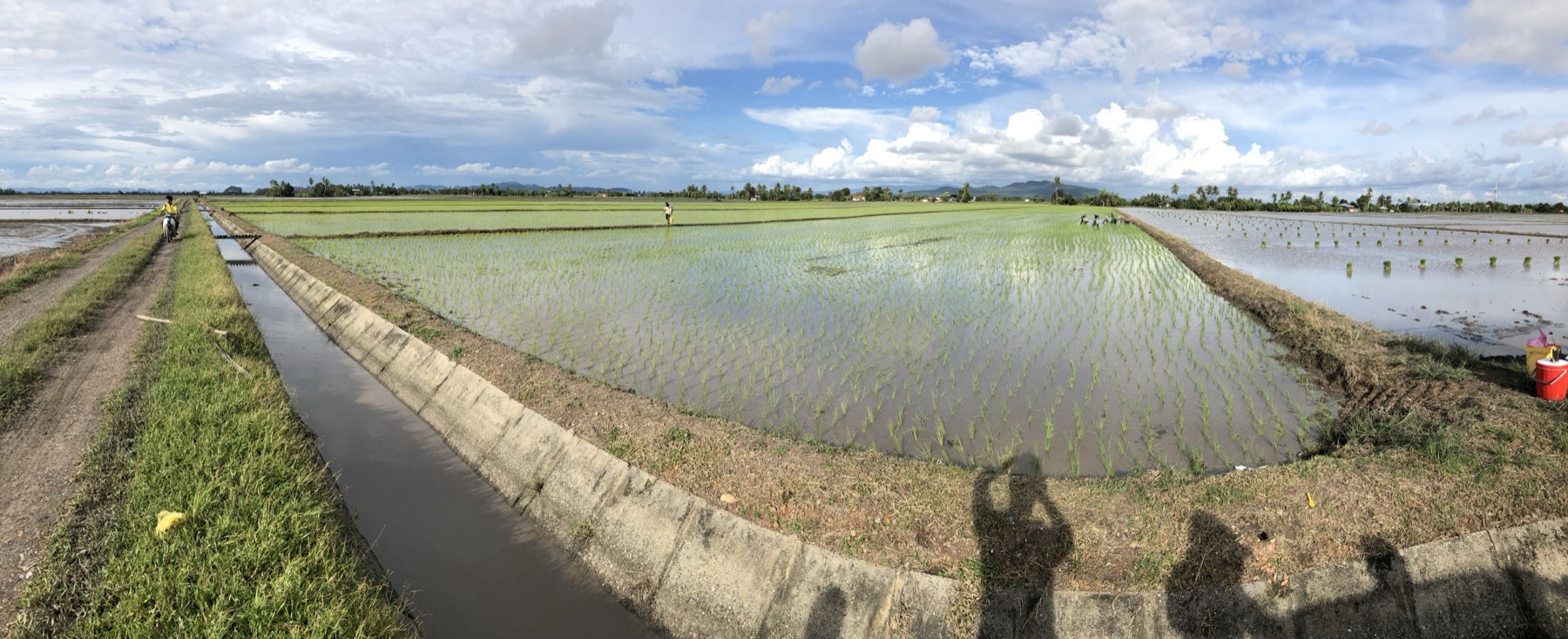
The Challenge – managing smallholders
The majority of rice farming globally is done by smallholders. Coordination across multiple stakeholders in a smallholder environment is a formidable challenge faced by any organization hoping to bring the advantages of economies of scale to a smallholder paradigm.
Whether a landowner, operator, contractor, service provider or any other part of this intricate ecosystem, managing the flow of information efficiently and economically is critical to this time-sensitive industry.
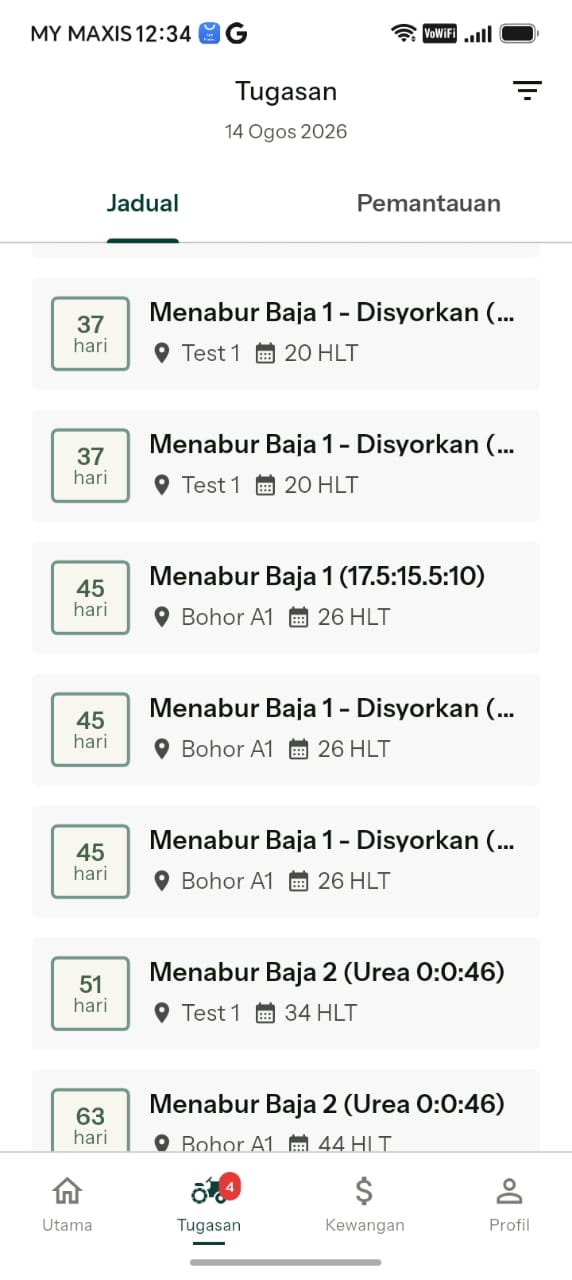
Every smallholder in the network, reporting from the field.
The Solution
Buku Padi gives smallholders the option to “join” a larger organization — a small cluster of farmers, a cooperative or any other farming body — and share their data, tasks and relevant information to help coordinate activities such as procurement, logistics and farm activities requiring shared resources like harvesters.
This greatly simplifies communications, eliminates confusion and errors, potentially improving overall productivity.
Buku Padi Pro
We are building a management system that can pull in data from a wide variety of devices, whether Buku Padi users, satellite, drones or any other IOT devices. The software is entirely web based, making it multi-platform and easy to set up.
Resource Sharing
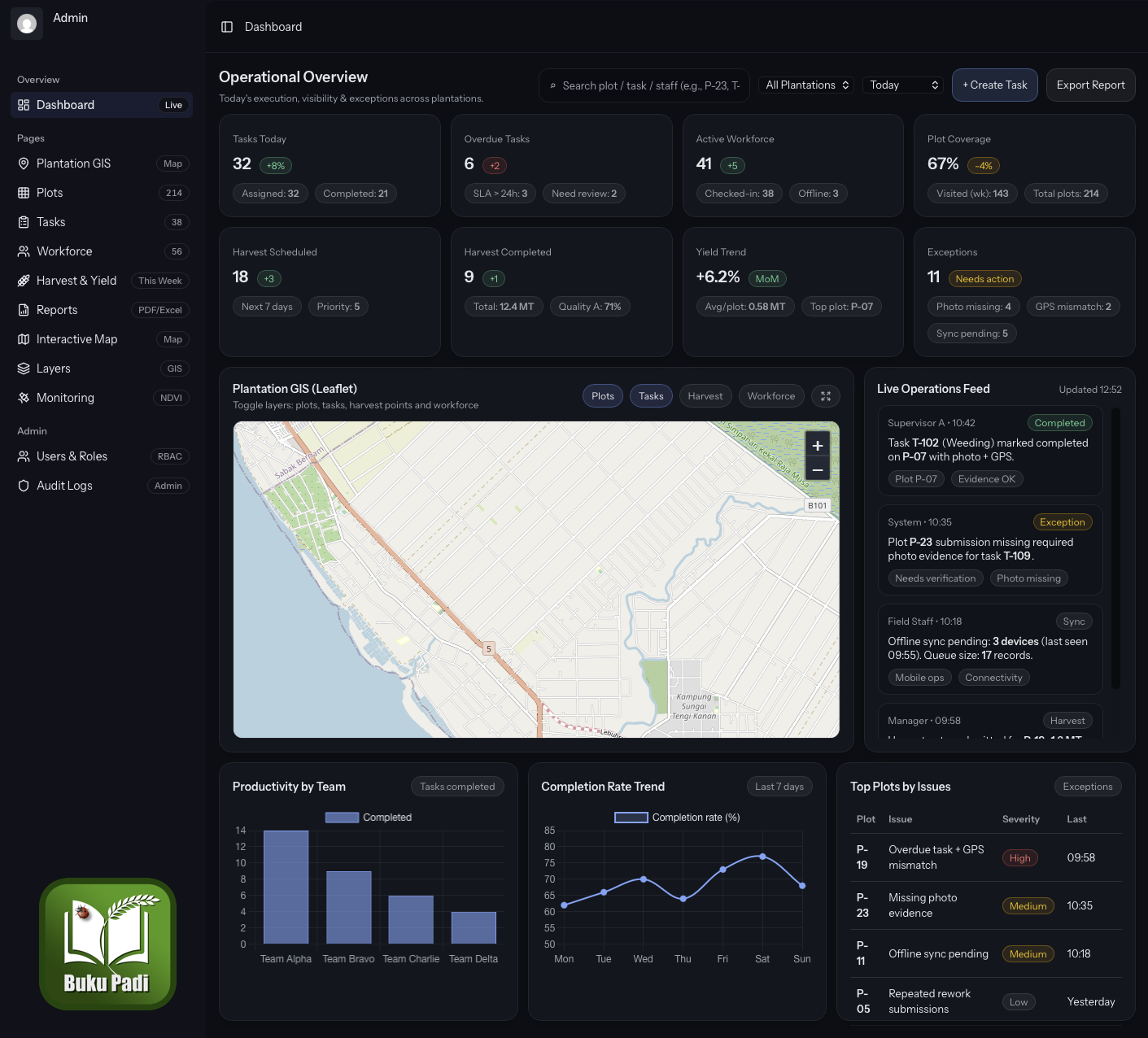
Large scale farming is an exercise in logistics and resource management. With accurate granular data from the ground, resources such as input, machinery, manpower and other requirements can be easily tracked and managed in real time for more effective utilization.
IOT Integration
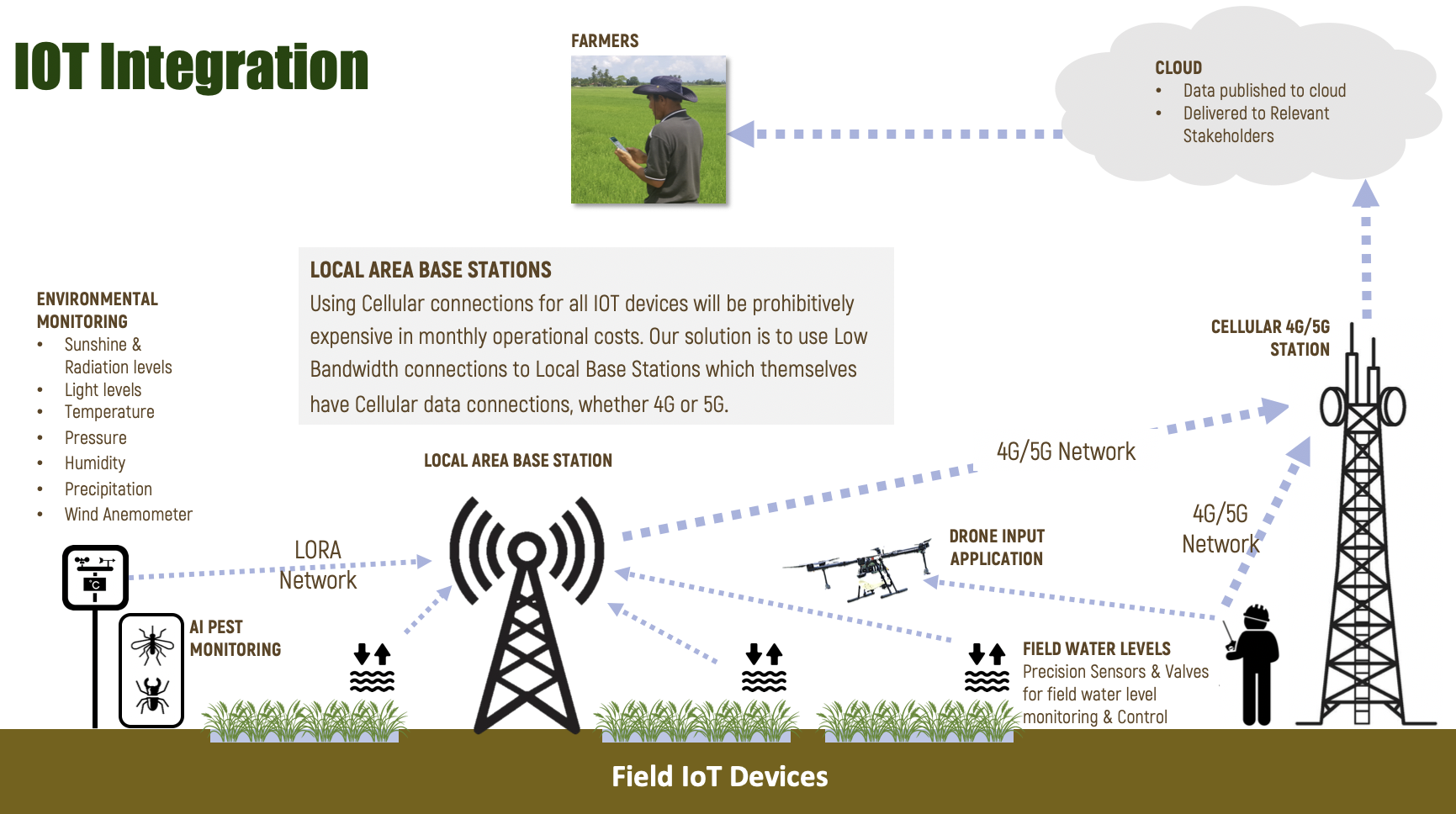
The proliferation of modern IOT solutions depend on hardware suppliers providing software to operate these products. The problem is that very few, if any of these solutions talk to each other. Buku Padi Pro will consolidate data from these devices, eliminating the need to use multiple platforms for each different tool.
Built-In Mapping
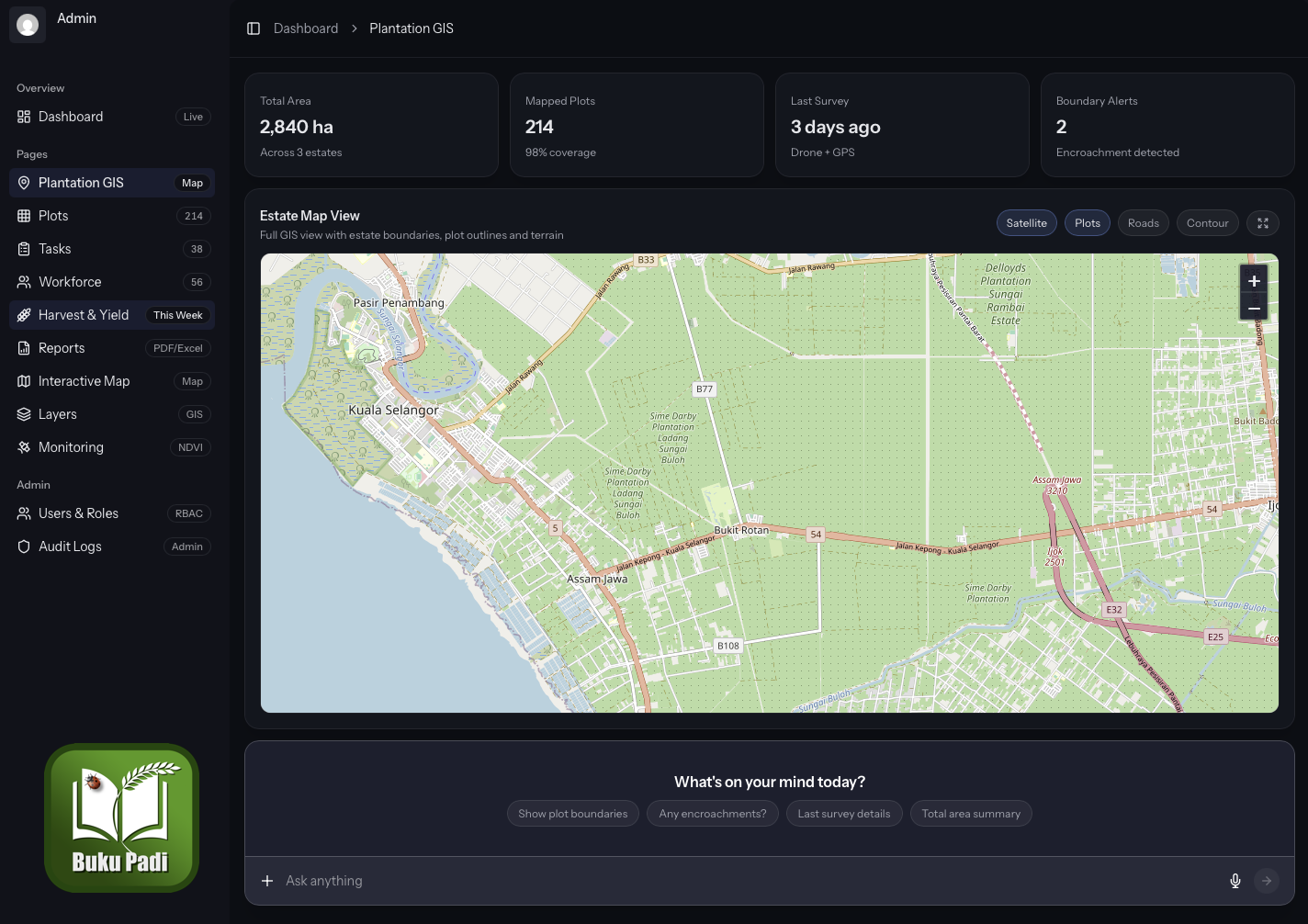
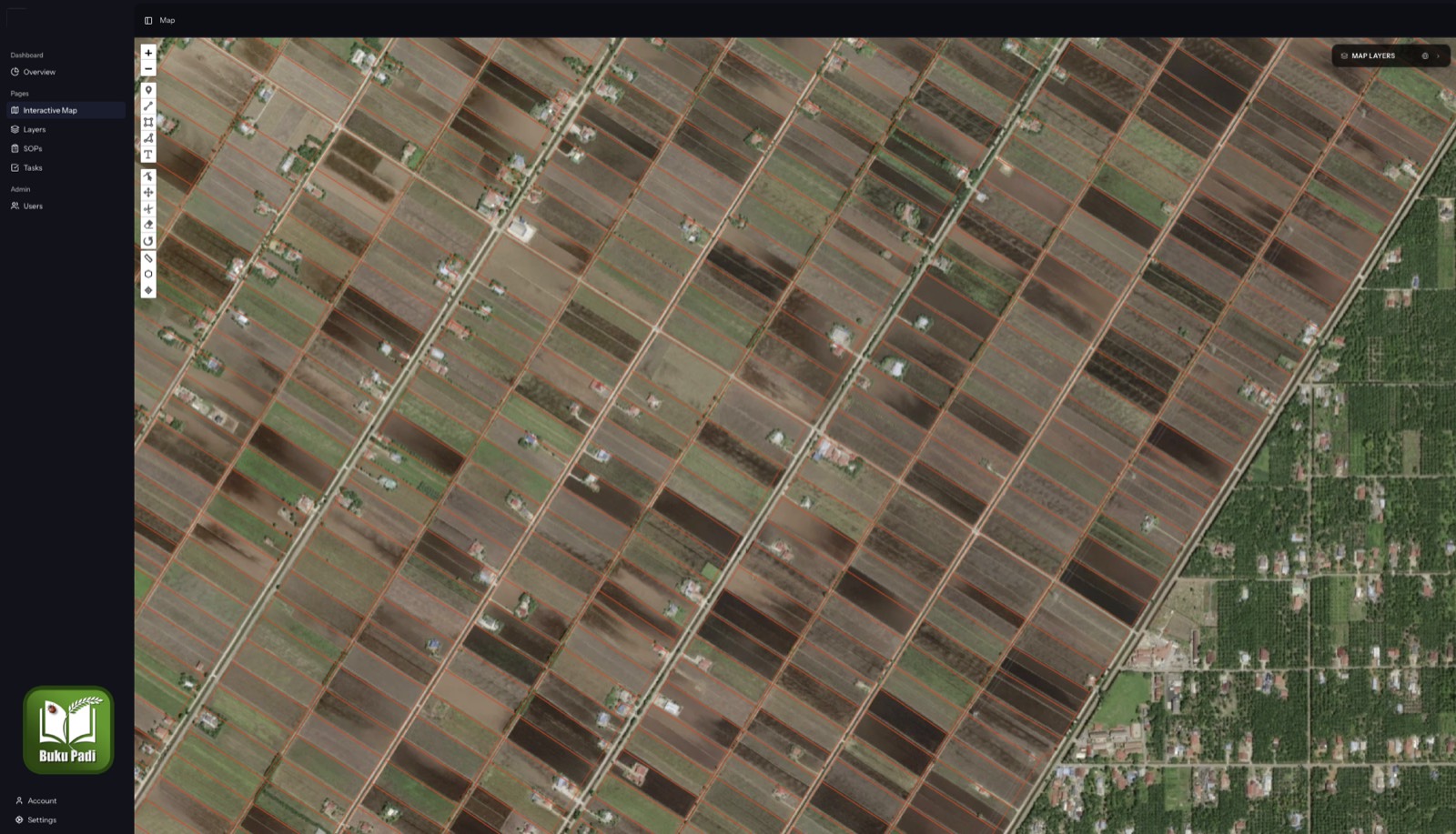
Core to this software is our own built-in mapping engine. This software allows us to provide full land-management and GIS features, entirely web-based at an extraordinarily low cost. This facilitates building fully integrated capabilities without offloading data to other sites, reducing cost, complexity and unnecessary commercial constraints.
Built-In AI Integration
Different users will need to look at different metrics and data and very often, key decision makers find difficulties in accessing exactly what they are looking for without resorting to tech support. Built-in AI will allow users to manage their specific requirements using natural language, reducing dependency on pre-formatted dashboards.
If you are a cluster, cooperative, estate or agency that coordinates smallholders and would like to talk about Buku Padi Pro, we would like to hear from you.
research@nutrenics.com